
Summer Organic Chemistry
Doesn’t Play by the Same Rules
The approach that works in a regular semester often won’t survive the summer format.
What you do next depends on where you’re starting from.
Summer organic chemistry covers the same curriculum as a full semester in 8 to 10 weeks, with no buffer between exams and no time mid-semester to recognize that your approach isn’t working and fix it. That’s not just a harder course. It’s a structurally different one and it changes what preparation needs to look like from the start.
Want the full picture before you decide? [Read: Taking Summer Organic Chemistry?]
Retaking organic chemistry this summer?
You’ve seen this material before. That’s both an advantage and a risk.
The advantage is real: you know what the hard parts feel like, where the course picks up speed, and what the exams actually expect. That’s not nothing.
The risk is that prior exposure can create the illusion of familiarity without the underlying understanding to back it up. Most students who struggle the first time weren’t working too little. They were using an approach that doesn’t work for organic chemistry. Without changing that specifically, more effort in the same direction produces the same result.
The summer format makes this more urgent, not less. There’s no week to get oriented, no slow ramp-up, no buffer if something doesn’t click early. The runway is shorter, which means what you do differently from day one matters more than it did the first time.
Guided Membership gives you the structure and expert direction to approach it differently this time. Not just more intensely.
Taking organic chemistry for the first time this summer?
The drive that got you here is real, and this is a manageable course if you approach it the right way.
What most high-achieving students discover mid-summer is that organic chemistry doesn’t respond to effort the same way other hard classes do. It’s not about how many hours you put in. It’s about whether those hours are building genuine understanding or just accumulating coverage.
The summer format adds a specific wrinkle. Eight weeks at full intensity is a long time to sprint. Students who go in at maximum effort from week one often find themselves at week four, when the material gets harder and the exams get less forgiving, running low on the reserves they need most. By then, the grade they planned for is less certain than it looked in June.
None of this is a warning. It’s a briefing. The students who hit their grade target in this format aren’t the ones who work the most hours. They’re the ones who make better decisions about where those hours go.
Guided Membership gives you expert direction and accountability throughout the semester, so the effort you’re already bringing is applied to the right things in the right order from the start.
Thinking about getting ahead of organic chemistry before the fall?
That instinct is worth acting on. Students who come into organic chemistry with a basic sense of how the subject works have a real advantage over those who encounter it cold.
The honest reality is that summer prep works best when the goal is right. You’re not going to cover an entire semester before the course begins. What actually holds is building the foundational understanding that everything else rests on, so that when the pace picks up in the fall, you’re not encountering the core ideas for the first time.
If you want to get started at your own pace, Self-Study Membership gives you access to foundational content on your own schedule.
If you want something more structured, the Summer Foundations Program is a 6-8 week individual preparation built around exactly that: the concepts organic chemistry is built on, regardless of your school, your textbook, or your syllabus. It’s not a preview of the entire course. It’s the groundwork that makes the entire course make sense.
Most students who start in the summer find that continuing into the semester is where the preparation really pays off. Both options are designed with that in mind.
Self-Study
For students who want structured organic chemistry practice and clear explanations, and are comfortable working independently.
$29 / month
Build understanding before your exams.
Includes:
✅ 300+ Detailed organic chemistry tutorials with members-only sections
✅ 1500+ Practice questions with detailed answer keys
✅ Interactive quizzes with instant feedback
✅ Access to the PDF Resource Library (aka Organic Chemistry Notes)
❌ Priority Q&A and feedback with Victor
❌ Weekly guided group problem-solving sessions
Renews monthly
Cancel or upgrade anytime
Guided
For students who want ongoing organic chemistry guidance and direct feedback from Victor when questions come up.
$99 / month
This is where you stop guessing whether you’re doing things right.
Includes:
✅ 300+ Detailed organic chemistry tutorials with members-only sections
✅ 1500+ Practice questions with detailed answer keys
✅ Interactive quizzes with instant feedback
✅ Access to the PDF Resource Library (aka Organic Chemistry Notes)
✅ Priority Q&A and feedback with Victor*
✅ Weekly guided group problem-solving sessions
Renews monthly
Cancel anytime
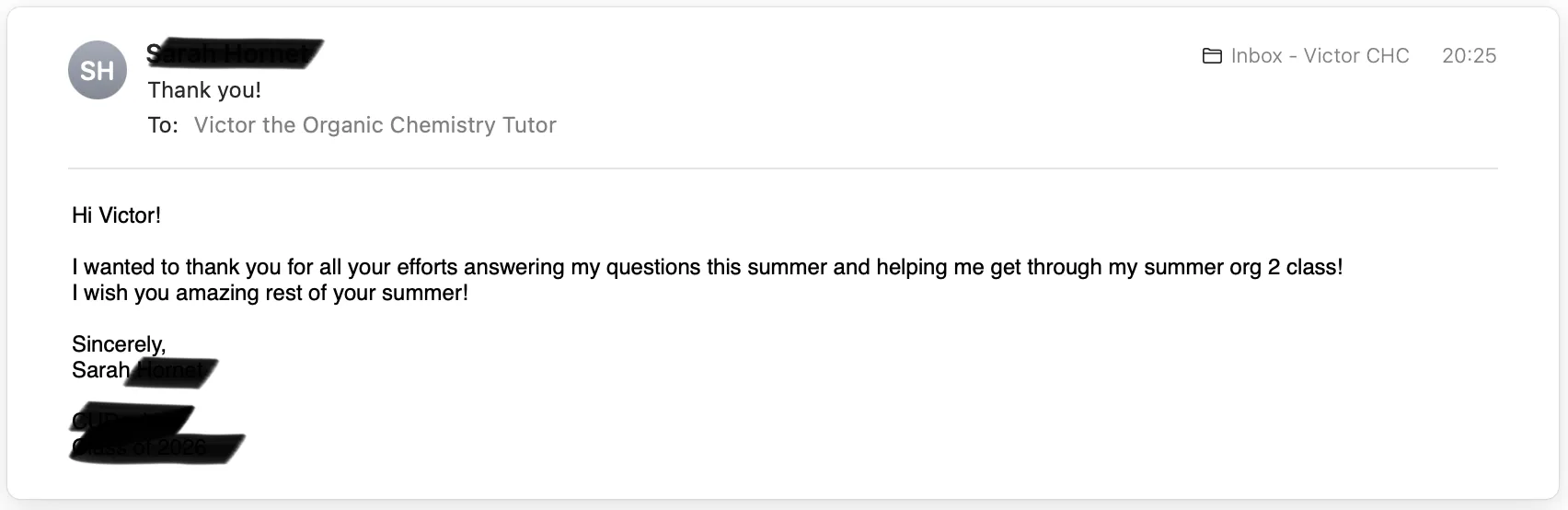
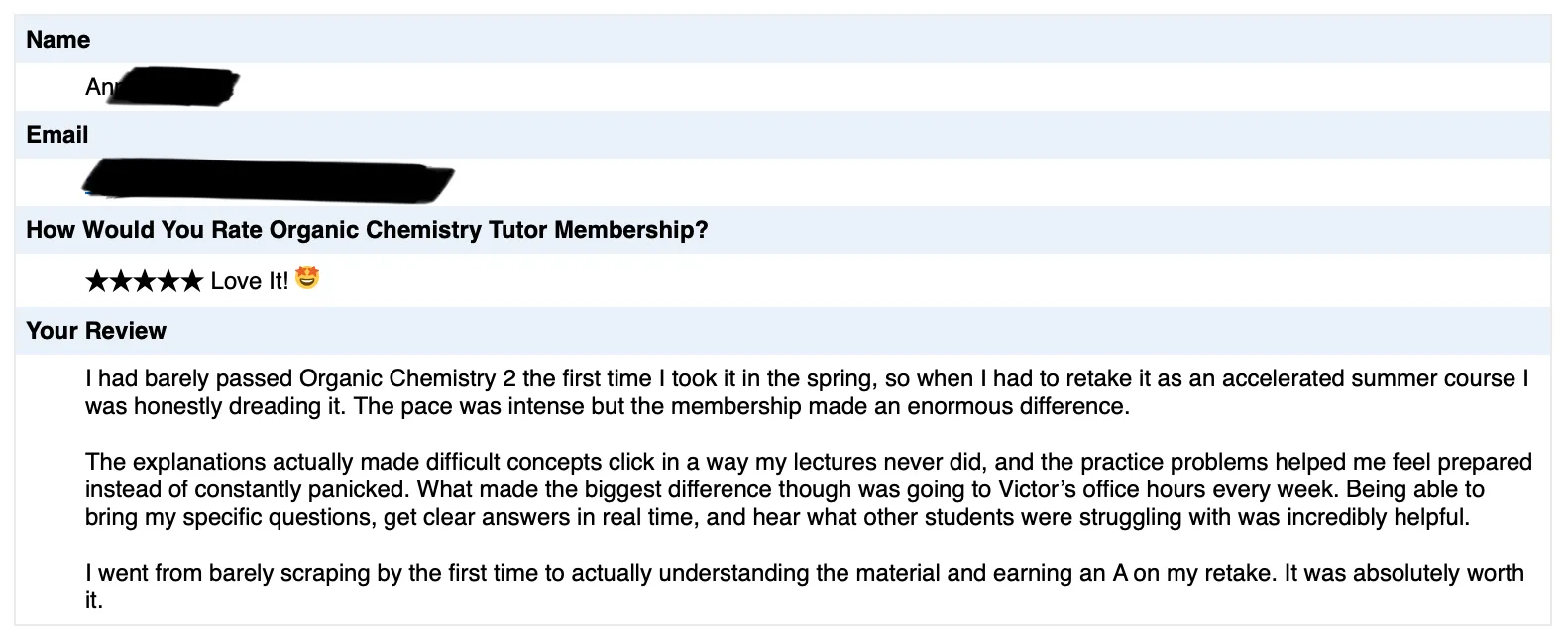
What Students Say:
Frequently Asked Questions
Summer organic chemistry doesn’t give you time to wait and see. If you’re considering Guided Membership or the Summer Foundations Program, availability for summer is limited. The earlier you reach out, the more of the semester we can actually work with.