Do You Need an Organic Chemistry Tutor?
If you’re going to be taking organic chemistry in the future, or maybe you’re already taking the class, and especially if you’re struggling with the course, you might be wondering whether getting an organic chemistry tutor is a good idea. So, let’s address the elephant in the room: do you need an organic chemistry tutor? And the answer is no, you do not need an organic chemistry tutor, but you might want one. And those are two very different things. Let me explain.
I’m a professional chemist and chemistry educator, and I’ve been working with chemistry students for over 20 years. What I’ve learned from my own personal experience is that when it comes to students struggling with organic chemistry, it’s never about intelligence. I have seen plenty of students get through the class without ever hiring a tutor, and I have seen students whose semester was completely turned around by hiring one.
What is NOT Tutoring
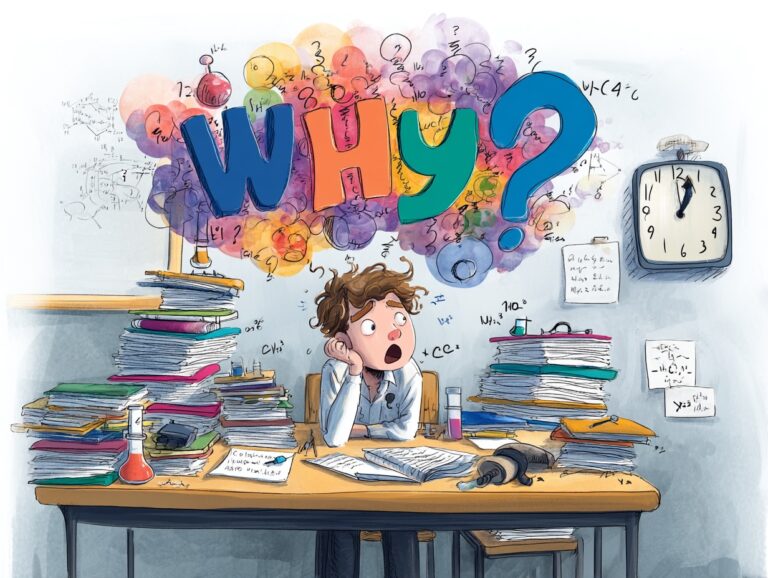
Before we go any further, let’s talk about one huge misconception that a lot of students have about tutoring. Most students think that when they hire a tutor, they are hiring somebody to explain things to them. That’s not quite what tutoring is all about. Tutoring is about figuring out why you are struggling. Explanations are the easy part. Figuring out the core of where the problem is, that’s the hard part, and a tutor can help you with that in multiple different ways.
What A Tutor Can Do For You
First of all, a tutor can help you find the problems that you yourself may not even realize you have. Usually, when you’re struggling with a chapter of some sort, the problem isn’t the chapter alone. It’s all the other material that you might have missed before that chapter.
A tutor will also personalize the explanations. A book will give you an explanation, and if you don’t get it or something doesn’t click, well, you’re out of luck. A tutor will change their explanations and change the way they approach a topic until it clicks for you specifically.
A tutor can give you continuous feedback, not just telling you that this or that is wrong and how to fix it, but explaining why your brain jumped to this or that conclusion and how you can fix that in the future.
A tutor can also save you a lot of time. Something that might take you hours (four, five, six hours) to figure out on your own by going through the textbook, lecture notes, YouTube tutorials, you name it, a good tutor can handle by pinpointing where the problem is and giving you resources, saving you those hours.
A tutor will also help you prioritize what is important and what is not. Often, students might not realize that a certain topic or a certain type of problem is just not that big of a deal, but they will spend a lot of time ruminating on that subject without realizing that in the long run, it’s not that important.
And finally, an experienced tutor will help you recognize your instructor’s patterns and tell you what your instructor is likely to ask on the test. Of course, this doesn’t mean the tutor has some sort of insider knowledge. But a tutor who has seen the tests that an instructor writes year after year might recognize that a certain topic or a certain style of question is going to be more common than another on the test. For instance, whenever I work with any of my students, I always ask them to give me the exams from their instructor, whether those are exams from this semester or something they might have from previous semesters. This way, I can look at the structure of the exam and very easily figure out what type of questions the instructor likes and what they are likely to ask you on the test.
When Not To hire A Tutor
While a tutor can do a lot for you, there are certain scenarios in which you absolutely should not hire a tutor.
I’m not going to sugarcoat it here: some students, when they hire a tutor, actually hire a babysitter. They want somebody to take responsibility for their class, remind them of the deadlines, remind them of the homework, and so on. That’s not what tutoring is all about. If you need somebody to remind you of your deadlines, that’s not the tutor’s job.
Another thing I sometimes see is people hiring a tutor because they need a study buddy. They need somebody to sit with them while they’re working on their homework, reading the textbook, or watching lectures. If that’s what you need, get yourself a study group. Find somebody from your class to work through the problems with you. A tutor can help you with that, of course, but it would be a waste of your time and resources.
And of course, I shouldn’t even have to say this, but a tutor is not here to do your homework or take your exams or anything of that sort.
Finally, one of the most common things I see happening all the time: a lot of students think that tutors and instructors have some sort of hidden knowledge, that we’re going to teach you tricks that will easily get you through the test. Tutoring is not about trickery. And another important thing I want to point out here: if you do rely on tricks, they might work in some situations, but any instructor who’s been doing this for more than five seconds knows how to write a test that tests for tricks. So if you’re relying on tricks, I can guarantee that in many cases you are still going to fail your test, because tricks don’t work in organic chemistry. Tricks have very limited applicability, so do not rely on them, nor should you ever be asking your tutor for tricks.
Not All Tutors Are The Same
So now that you have a pretty good idea of what a tutor can do for you and when you should not get one, let’s very briefly talk about what makes a good tutor. Very briefly, because that is actually a topic for an entire post on its own. When it comes to tutoring, experience helps, but it’s not the most important thing. What is more important is what is known as PCK, or Pedagogical Content Knowledge. It is important not only to know the material, but also to understand why students struggle with this or that topic and how to explain that topic to students. Knowing why students struggle with a topic is what separates a teacher from somebody who simply knows the subject.
Drawbacks of Hiring A Tutor
Of course, tutoring comes with a few downsides too. The biggest one is the cost. Good tutors unfortunately come at a premium, so if you are thinking about getting a tutor, you’ll need to budget for that.
Tutors are also often booked ahead of time, so you might have to compromise when it comes to scheduling. You might have to settle for a time that is not perfect for your schedule, but that’s what you’ll have to work with.
The quality of tutoring can also vary from one person to another. Likewise, a tutoring style that works for one person might not work for another. So whenever you’re looking for a tutor, you might want to try a couple of people and talk to them just to figure out whether a particular tutor clicks for you. But as I’ve mentioned before, what makes a good tutor and how to find one is a topic for a completely separate tutorial, so I’m not going to spend too much time on that here.
One other thing I do want to mention is that occasionally students develop a dependency on their tutor. If you don’t feel comfortable answering questions or approaching problems on your own, and you always need your tutor’s insight on what’s going on, that’s a red flag. Something is wrong, and you need to reevaluate how you’re working with your tutor and what exactly you’re getting from that relationship.
So… Do You Need An Organic Chemistry Tutor?
So, coming back to my original question: do you need a tutor? Of course, the only person who can answer that is you. A tutor might be a great investment if you’re getting one for the right reasons. If you have just failed your exam, don’t just think, “Oh, I need a tutor.” Ask why you failed that exam. What was the problem? Was it the previous knowledge? Was it the lack of practice? Was it something else? If a tutor can help you solve that problem, then yes, of course you might want to invest in a tutor.
Likewise, if you are going to be taking organic chemistry in the future and you think you will need a tutor simply because you are scared of the subject’s reputation, think about why exactly you are scared of it. I promise you, organic chemistry is not that difficult. It is very different from any other course you have taken in college, but it is quite manageable, and as I’ve mentioned before, I have seen tons of students who can do it without a tutor. So think: what exactly can a tutor do for you? Is it the time savings? Is it pointing out specific flaws in your preparation? Is it tailoring instruction to your specific needs? What is it that you are trying to accomplish by hiring a tutor? Don’t just get one “just because,” that is never a good idea. What is a good idea is to figure out why you need one, and if you think a tutor is going to be helpful, then get one.
Now that you know what tutoring can and cannot do, the next obvious question is how to find a good organic chemistry tutor, because trust me, they are not all created equal. That is exactly what I cover in the next time!